
Most dry eye that will not settle down starts in the oil glands along your eyelids. This treatment warms those glands, frees the oil trapped inside, and helps your tears hold together longer. About two minutes per session, both eyes.
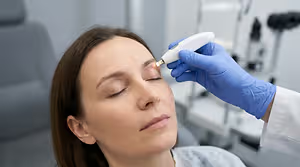
Thermomechanical Eyelid Therapy
Dry Eye Relief That Begins at the Eyelid
Why Drops Fall Short
When Dry Eye Starts in the Oil Glands
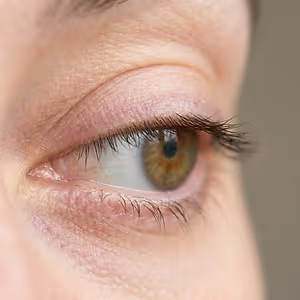
Every blink should lay a thin film of oil across the surface of your eye. That oil comes from the meibomian glands, arranged in rows along the upper and lower eyelid margins. When the oil thickens, or when a gland opening blocks, tears evaporate faster than your eyes can replace them. No amount of drops makes up for a tear film that cannot hold together.
This is evaporative dry eye, and it explains the burning, the grit, and vision that blurs and then clears each time you blink. It is one of the most common reasons people feel dry all day while using lubricants all day.
How the Treatment Works
Controlled Heat, Delivered in Tiny Points
The applicator rests against the eyelid skin and delivers brief pulses of heat in a pattern of tiny points. There is no laser, no intense pulsed light, and no radiation. The warmth reaches the glands sitting just beneath the surface, softening oil that has thickened and stopped flowing.
Because the treatment works from the outside of the lid, it reaches the upper eyelid as well as the lower. Many blocked glands sit in the upper lid, which is part of why compresses and drops so often fall short. Our Reno office uses the Tixel-i device to deliver this treatment.
Your Treatment Plan
What a Course of Treatment Looks Like
Treatment fits into an ordinary appointment, and we plan the series as a whole rather than as a one-off. Here is the shape of it.

Is It Your Eyelids?
Signs That Point to Blocked Oil Glands
These are the signs of a tear film breaking down. They point to a likely cause rather than confirm one, which is why the exam comes first.
Care That Starts With a Diagnosis
We Confirm the Cause Before We Treat
Dry eye rarely has a single cause. A dry eye exam looks at tear volume and quality, gland function, lid structure, and inflammation. BIONAQS imaging at our Reno office gives us a detailed picture of what is happening on the surface of your eyes.
If your oil glands are driving your symptoms, this treatment is a strong fit. If something else is, we will tell you so and treat that instead.
Common Questions
Your Questions About Eyelid Therapy
You will feel brief pulses of warmth along the eyelid. Each pass is short, and we pace the session around your comfort.
Many people notice less irritation within days. Tear film measurements tend to keep improving through the series and after it ends.
A warm compress heats the whole lid at once and cools within minutes. This treatment delivers measured heat in a set pattern across the gland area, which is a different level of care for oil that has thickened and stayed put.
The treatment does not use laser, light, or radiation energy, and it can be used on all skin types. Tell us about any skin conditions, past eyelid surgery, or recent facial procedures at your exam.
Many people rely on them far less once their oil glands are working again. That is not a promise, and at-home care still matters. We will build a plan that covers both.
We review the cost and any insurance coverage with you before you begin, so nothing about the plan is a surprise. Our team can help you check your plan.
Next Step
Find Out If This Is Right for Your Eyes
Book a dry eye exam and we will tell you what is actually causing your symptoms, then whether eyelid therapy belongs in your plan.